绝望主妇
Multiple Chinese universities raise gaokao score requirements for arts admissions_我的网站

A |
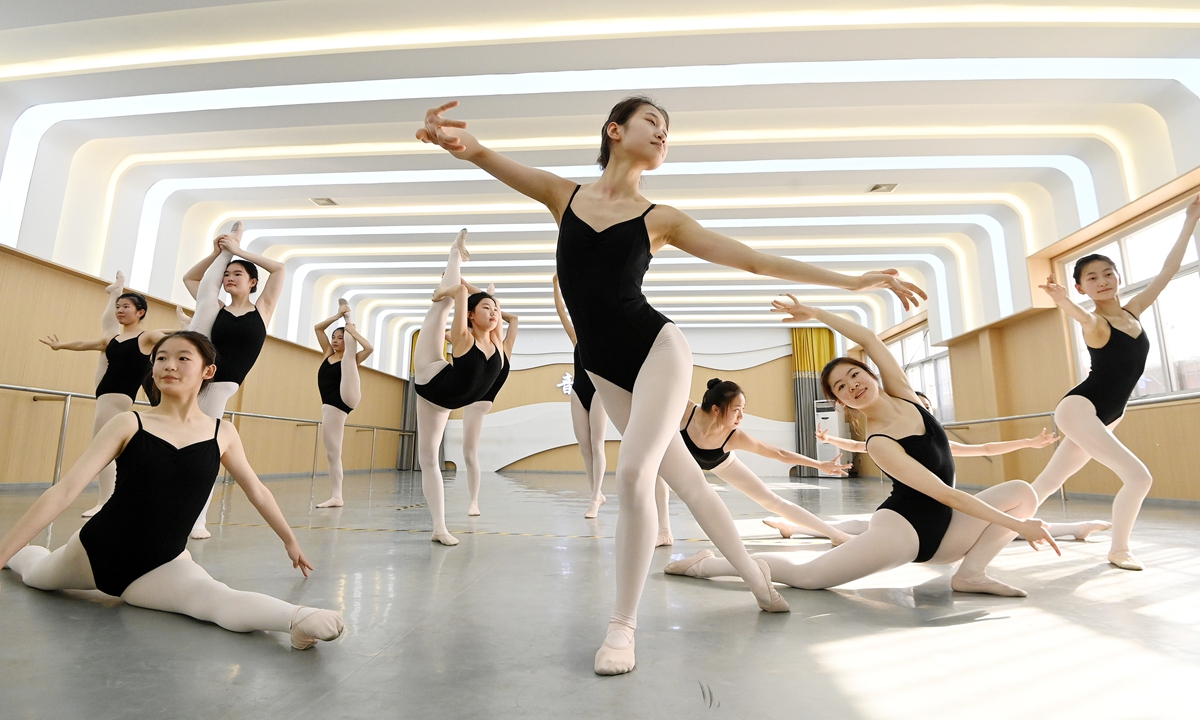
Students practice their skills at a dance training center in Handan, North China's Hebei Province. Photos: VCG
Even during summer break, changes to the admissions policy at the Communication University of China (CUC) have sparked heated discussions among students, with the reform becoming a hot topic on campus and on social media.
Amid heated debate over China's top media and arts school's admission reform, eight majors, including radio and television directing and theater directing, will no longer require separate arts exams and will instead admit students based solely on gaokao (the national college entrance exam) scores starting next year.
China's art college entrance examination, known as yikao, is a special admission pathway for students applying to arts-related majors. Applicants take both the gaokao and professional tests in areas such as fine arts, music, dance, acting, broadcasting and directing. Compared with many other university programs, art majors have traditionally placed less emphasis on gaokao scores and more on candidates' professional abilities and artistic potential.
"As one of China's most influential universities for media education, CUC's reform is seen as having broader implications," Xiong Bingqi, president of the 21st Century Education Research Institute and vice president of the China Association of College Newspapers, told the Global Times.
In his view, future arts admissions are likely to place greater emphasis on students' cultural literacy, professional interests and long-term potential.
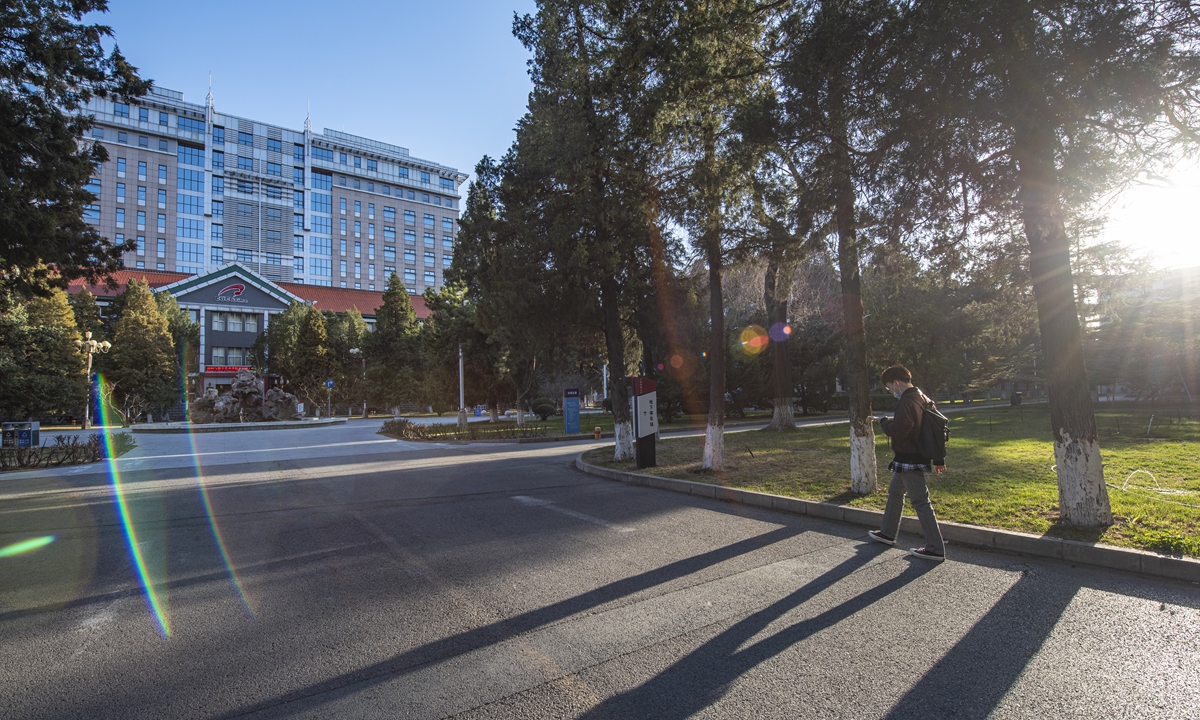
A view of the campus of Communication University of China in Beijing
Beyond the 'shortcut'
CUC's move reflects a broader trend among Chinese arts universities. In recent years, institutions such as Nanjing University of the Arts and Henan Academy of Fine Arts have reduced the number of majors requiring school-based exams on their specific art subjects, placing greater emphasis on academic performance and provincial-level arts examinations.
The changes reflect a broader trend in China's arts education admissions system, where universities have increasingly emphasized students' cultural foundation alongside their artistic abilities.
"CUC's latest adjustment reflects a broader trend in arts education reform, with some arts-related majors beginning to admit students based on their gaokao scores rather than separate professional examinations," Xiong told the Global Times.
According to Xiong, one of the key goals of the reform is to address the utilitarian mindset among some students and parents who view arts admissions as a "shortcut to college."
In the past, some arts programs had relatively lower requirements for cultural scores, prompting some students with weaker academic performance to turn to arts exams and enroll in professional training programs during high school. As a result, arts admissions were sometimes seen not as a choice driven by genuine artistic interest or career aspirations, but as an alternative pathway to enter universities.
"The cooling of arts exam fever, to me, is a good thing for arts education and talent cultivation," Xiong said. "By admitting eight majors directly based on cultural scores, CUC is effectively removing the stepping stone of the 'shortcut to college,' allowing more students with genuine artistic interests and professional ambitions to enter these fields."
For students, the reform has directly changed how they prepare for university and make academic choices.
"The changes have created more pathways for students interested in media-related fields," a junior arts management student surnamed Wang at CUC, told the Global Times.
Wang recalled that many students around her began preparing for arts exams as early as their sophomore year of high school and later traveled to cities where their target universities were located for intensive training.
As some media-related majors shift to cultural-score-based admissions, more students who did not take the arts exam but have a genuine interest in the media field may gain opportunities to enter these programs, she said.
Rethinking media talentBeyond changing how students enter arts majors, the reform has also sparked discussion over how universities should train future media professionals.
A CUC sophomore student surnamed Wei from the School of Theater, Film and Television told the Global Times that one challenge after scrapping arts exams for some majors is how to support students who enter without systematic professional training.
"Students who previously prepared for arts exams often developed basic skills in audiovisual language and practical experience before entering university. Those admitted based on gaokao scores may need stronger professional guidance and more opportunities for practice," Wei said.
In addition to individual student development, the reform has also prompted discussions over what qualities future media professionals should possess. Kai Zhu, a drama education instructor at a leading high school in Beijing, told the Global Times that an overemphasis on exam-oriented training in media arts education had previously led some programs to focus on templates and techniques while neglecting core competencies.
"If media arts become a low-score pathway to university, the professional nature of the field will become blurred, and the industry may face a shortage of well-rounded talent," Kai said. CUC's reform signals a shift toward selecting media talent with both cultural depth and professional skills.
"Creative fields such as screenwriting and filmmaking are not built on technical skills alone; they require an understanding of society, humanity and history," he said.
"Cultural accumulation determines the depth and vision of creative works."
The reform is therefore not merely about changing the way students enter arts programs. Ultimately, it is about what kind of creators media and arts programs hope to nurture: not only those equipped with professional skills, but those who can think deeply, understand society and transform their cultural knowledge into meaningful works, he noted.
Wang Wenpei contributed to this story.
。 ミラノ・コルティナ五輪のフィギュアスケート・ペアで金メダルを獲得した「りくりゅう」こと三浦璃来・木原龍一組(木下グループ)が23日、自身のSNSを更新した。木原に投げられた三浦が、偶然にも五輪の輪の上に乗っているように見える瞬間の写真。大バズリ中の“奇跡の1枚”は、海外ファンにも反響が広がっている。【画像】「完璧ね!」 4年前の“再現以上”に成功したりくりゅうの1枚 写真は、選手村の五輪モニュメントの前で撮影された。木原に投げられた三浦が宙で大開脚。まるで五輪の輪の上に座っていると錯覚するようなタイミングで撮られている。 実は4年前の北京五輪の“再現”でもあった。当時も大会終了後に、五輪モニュメント前で、木原が投げて、三浦が宙で開脚する構図で写真を撮っていた。今回は五輪の輪に乗っているように見えるだけでなく、三浦の開脚角度もさらにアップ。さらなる映え写真となった。 エモさとスゴさが詰まった1枚。海外ファンからもコメントが寄せられた。「信じられないくらい懐かしい。まさに完璧な再現ね!」 「彼女はものすごく体が柔らかい!」 「Wow」 「めちゃクールな再現だ」 「彼らは本当に特別よ」。

B |
Current article:http://539w5m.longdachemakuanshan.pics/list_u037k/8oe7.html
Published on:07:30:44

 《GTA6》媒体情报解禁时间定了!R星官方互动确认
 《Masters of the Universe》流媒体首秀表现亮眼,粉丝期待续作推出
 Priyanka Gandhi और Rahul Gandhi खुली जीप में यूं पहुंचे सुपौल... तेजस्वी यादव ने थामी वोटर अधिकार यात्रा की कमान
 6 killed in Russian attacks on Ukraine as Kyiv continues drone counterstrikes
 今日大雪,节气到底是什么?
 望海满族乡四方村:配备性能齐全垃圾箱 300盏路灯亮化
 投诉酷狗音乐
 今天降雨最强时段赶上晚高峰,低洼路段、下穿桥洞易积水,出行注意


